The Observatory’s goal is to transparently reflect the verifiable truth.
Choosing Claims to Check
The Observatory aims to focus on one statement at a time, considering its context. Examples of common types of newsworthy statements we want to check:
- Numeric
(“Median wages dropped more than 20% since my opponent took office.”)
- Comparisons
(“Only three counties in the state have no public ice-skating rinks.”)
- Biographical
(“I’m the one state senator who has actually worked on a dairy farm.”)
- Paraphrasing
(“My opponent has said she thinks health care workers are overpaid.”)
- Interpretations
(“If we pass this bill, our children will no longer learn cursive in school.”)
On occasion, we will check a statement that makes multiple claims. This can result in each discrete claim receiving its own rating on the Veritas Scale. — Cara Lombardo contributed to this section
Rating Claims on the Veritas Scale
The ratings we use on the Veritas Scale are:
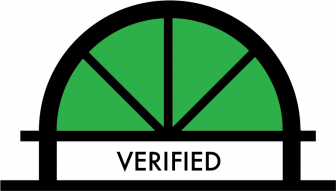
Verified: The claim we fact-checked is accurate and is not missing appropriate contextual information.
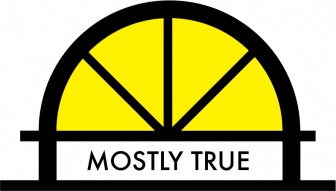
Mostly True: The claim we fact-checked is generally accurate but needs additional clarification and/or contextual information for the audience to consider.
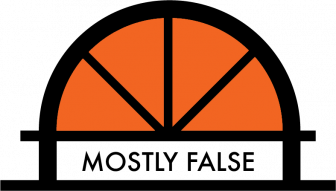
Mostly False: While some elements of the claim we fact-checked are true, the claim ignores important details, essential contextual information, or critical caveats that the audience needs to comprehensively consider the veracity of claim.
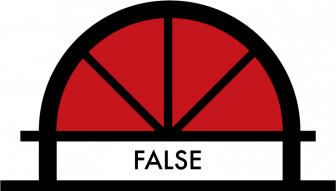
False: The claim we fact-checked is not accurate.

Unobservable: The claim we fact-checked cannot be precisely checked, possibly because it is a statement of opinion, an uncheckable forecast about the future, and/or uses language that does not have a commonly accepted definition, cannot be precisely estimated, or requires evidence that cannot be located.